
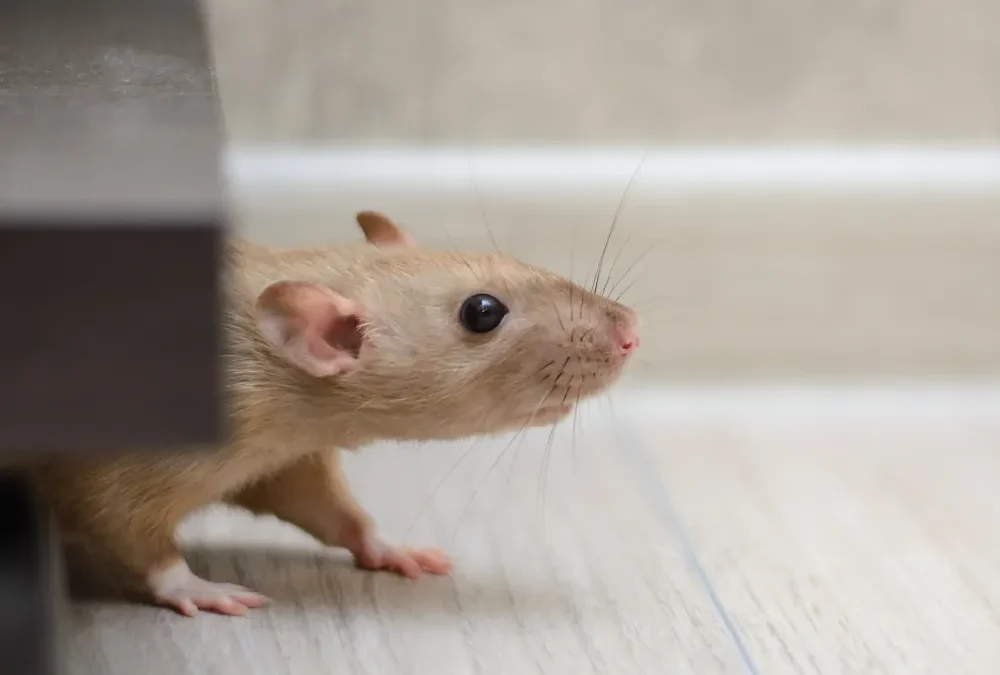
You’ve seen the signs: droppings, scratches, chew markings, and maybe even a faint rustle in the walls once the house goes quiet at night. You’ve got a rodent in your home, and every new clue raises the same question: is it mice or rats?
Rats and mice leave similar evidence behind, so it can be difficult to determine which issue you’ve got on your hands. There are some differences, however, that can help to determine the type of pest you’re dealing with so you can get a tailored treatment plan. Let’s walk through the key differences so you can identify what’s behind your walls and take the first step toward reclaiming your Knoxville home.
In this blog
Common Signs of Mouse Infestations in Knoxville
Small Droppings the Size of a Grain of Rice
Droppings are one of the first signs of a rodent infestation, and though you may not want to inspect them too closely, their size and shape can actually tell you a lot about what you’re dealing with. Mouse droppings are tiny, usually around 1/8 to 1/4 inch long, with pointed ends that resemble dark grains of rice. You’ll often find them scattered in kitchen drawers, pantry shelves, and along baseboards where mice travel between their nest and a food source.
Tendency to Explore
Mice are much more social and eager to explore than rats. This means they’re easier to spot, and you’re more likely to see them out in the open, darting across a kitchen floor or slipping behind an appliance. Their curiosity also leads them to investigate anything new in their environment, so signs of activity often show up in several different areas of the home rather than one concentrated spot.
Small Chew Marks and Narrow Entry Points
The baseboards of your walls and the actual entry point of the mice will likely show signs of fine, shallow gnaw marks, along with food packaging, cardboard boxes, and other soft materials around the home. Because mice can squeeze through gaps about the size of a dime, small cracks around pipes, vents, and door frames are common places to look for evidence of how they’re getting inside.
Light, Quick Scurrying Sounds
Mice are smaller and lighter than rats, so pay attention to the level of noise the rodent activity is causing. At night, mice tend to make soft, rapid pitter-patter noises inside walls, ceilings, and cabinets. These sounds are usually brief and fast-moving, matching the quick, darting movements of a small rodent on the go.
Common Signs of Rat Infestations in Knoxville
Larger, Round Droppings
A rat’s droppings are usually round and larger than a mouse’s. They’re often 1/2 to 3/4 inch long, thicker in shape, and typically found in concentrated piles near nesting areas, along walls, or in attics, basements, and crawl spaces. Because rats tend to stick to the same routes, you may notice droppings building up in the same spots over time.
Cautious Behavior
Rats are much more wary than mice and tend to avoid anything new or unfamiliar in their environment, sometimes for days at a time. This cautious nature means you’re less likely to see them out in the open, which can allow an infestation to grow before it’s noticed. It can also make a rat problem harder to resolve with store-bought traps alone.
Large Chew Marks and Openings
With strong teeth capable of gnawing through wood, plastic, insulation, and even soft metals, rats leave behind rough, ragged marks that are hard to miss. They can fit through openings about the size of a quarter and often widen existing gaps around foundations, utility lines, and rooflines, creating larger entry holes.
Heavier Scratching and Thumping Sounds
Since rats are bigger and heavier than mice, the noises they make tend to be louder and more noticeable. Listen for scratching, gnawing, and thumping in attics, walls, and crawl spaces, often slower and more deliberate than the quick scurrying of a mouse.
What’s the Difference Between Mice and Rats?
Both mice and rats are major disruptions to the comfort of your home. They can affect your home in different ways, though, and it all goes back to the differences between the species.
Mice are much smaller, with slender bodies around 2 1/2 to 4 inches long, large ears, pointed snouts, and thin tails. Rats are noticeably bulkier, often 7 to 10 inches long not counting the tail, with blunter snouts, smaller ears in proportion to their heads, and thick, scaly tails.
The physical differences between mice and rats shape how each rodent behaves inside your home. Mice tend to stay close to food sources, contaminating pantries and cabinets while multiplying quickly, while rats are capable of causing more serious damage to wiring, insulation, and wood thanks to their size and powerful teeth. Knowing which one you’re up against helps explain the signs you’re seeing and what it will take to resolve the problem.
Getting a Tailored Treatment Plan for Your Home
From a Norway rat or a roof rat to a house mouse or deer mouse, the right plan makes all the difference. Each type of rat and mouse responds differently to treatment, and their habits determine where they nest, how they get inside, and what it takes to keep them out. Norway rats tend to burrow near foundations, roof rats prefer to climb into attics, house mice settle in close to indoor food sources, and deer mice are more common in rural and wooded areas, especially in sheds, cabins, and seasonal homes.
That’s why a thorough inspection of your home should always come first. By identifying exactly which rodent is in your home and how it’s getting in, your pest control team should build a custom plan that targets the problem at its source, seals off entry points, and minimizes pesticide use so your family can get back to enjoying a home that feels like yours again.
At Pest Ops, we’ve helped with countless rodent control situations across Knoxville and East Tennessee. Reach out to us today to get started.
Talk to Pest Ops for Mouse and Rat Control Services in Knoxville, TN
Paying close attention to the rodent’s droppings, behavior, chew marks, and sounds can tell you a lot about what’s actually going on in your home. At Pest Ops, we offer rodent control services designed to help, whether you’re dealing with a rat or mouse infestation.
We understand that treatment plans and options vary by pest type, and our science-first approach starts by identifying exactly what’s in your home before building a custom plan around it. Backed by a certified staff entomologist and our OPS philosophy (Organic, Proven, Sustainable), we focus on stopping rodent problems at the source while minimizing pesticide use in the spaces where your children and pets live and play.
Schedule mouse and rat control services in Knoxville, TN, today, and get back to enjoying your home in peace again.